

FSC ® Certified Supply Chain
Responsible forest management and legal timber sourcing, verified through chain-of-custody certification.
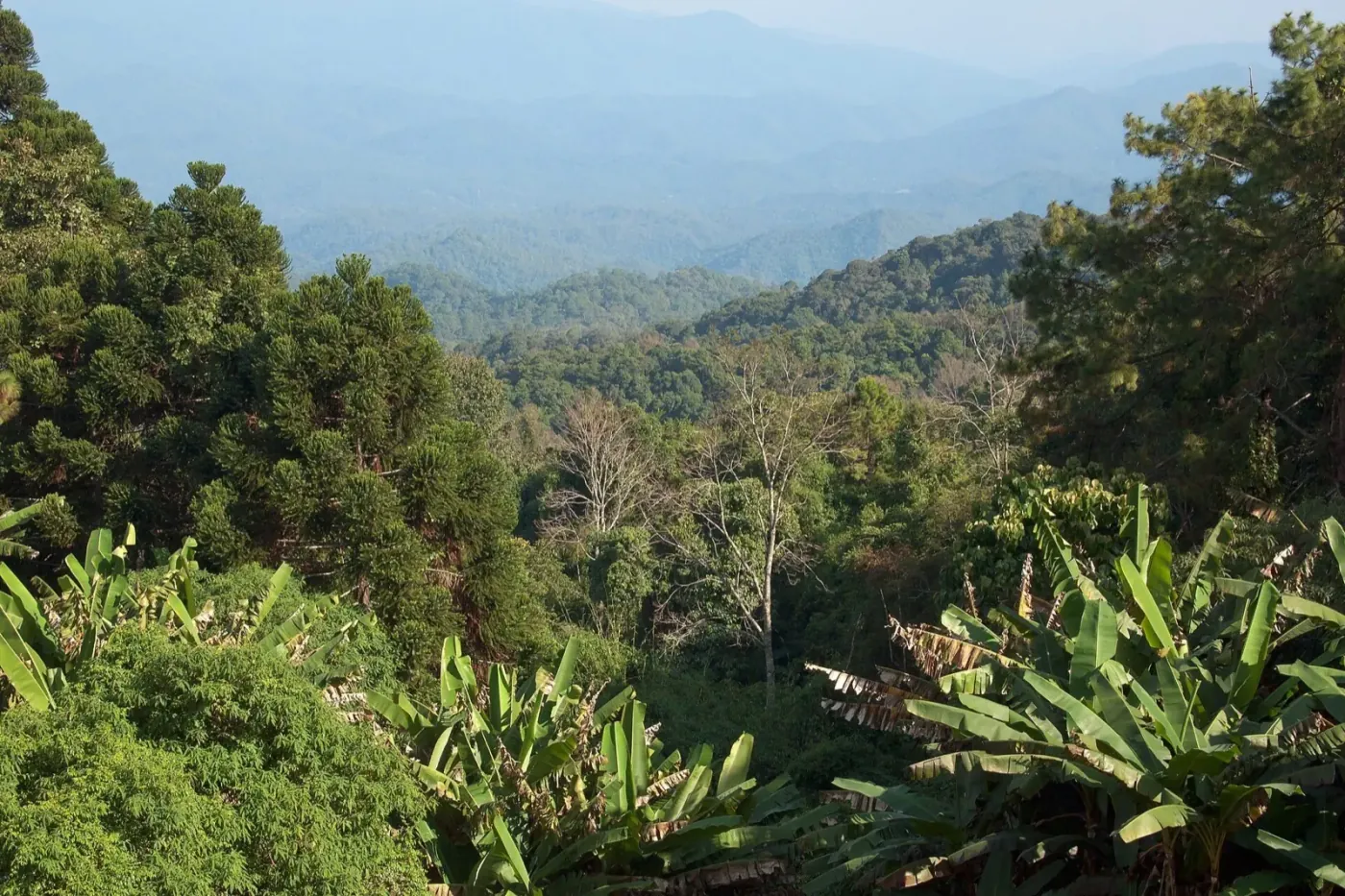
Okoume grows in one of the most intact rainforests on earth. Manufacturing there carries an obligation, and we treat it as one.
Five commitments
Responsible forest management and legal timber sourcing, verified through chain-of-custody certification.
100% of our timber is legal and fully traceable back to the concession it was harvested from.
Efficient use of resources with minimal environmental impact across the mill.
E0 emission glue options for healthier indoor environments, on request.
Our products meet the strict requirements of European and international markets.
Why it matters
Okoume grows in the Congo Basin, the second largest tropical rainforest on earth. A mill working with that timber either helps sustain the forest it depends on or quietly runs it down. There is no neutral position, and pretending otherwise is what gives the industry its reputation.
Gabon’s decision to stop exporting raw logs changed what manufacturing in the country means. Timber now has to be processed where it grows, which keeps the skilled work, the wages and the value inside Gabon instead of shipping them out with the logs. Our plant in the Nkok Special Economic Zone exists because of that policy. Milling at source is the single biggest contribution we make — a felled tree that leaves as a finished panel supports far more livelihoods than one that leaves as a log.
It also shortens the distance between the forest and the responsibility for it. When the people pressing the panel work in the same region the timber came from, sourcing is not an abstract line in a supplier questionnaire.
Responsibility starts well before the log yard. Every stem we buy is traceable to the concession it was cut in, with the permits to match, so a finished panel can be accounted for back to the forest floor. Chain-of-custody certification exists to make that claim checkable by a third party rather than simply asserted by us, which is the whole point of it.
Inside the mill, responsibility becomes a question of waste. Working in a single species means offcuts and short veneer can be graded down and used rather than discarded. Peeling to a consistent thickness, drying to a controlled moisture content and pressing with a monitored glue spread all reduce the number of panels that fail inspection — and every rejected panel is a tree that was already felled. Yield is an environmental measure as much as a commercial one, which is why the quality routine and the sustainability case are the same piece of work.
What leaves the mill has to be safe to live with, too. Low-emission glue options keep formaldehyde down for interior use, and panels are built to meet the requirements of the markets they are sold into rather than the minimum we could get away with.
Let’s talk volumes
We quote on full container loads to any port worldwide, with mill test certificates and certification documentation supplied on request.